powered by

powered by
The Beauty Connoisseurs

Monday, July 18, 2011

Color Therapy


One of the reasons I started this blog was to encourage self esteem through cosmetics. That may sound superficial to some, however, I see it as very real and very necessary. Cosmetics help enhance the beauty we already have. Though I'm not a makeup wearer, I do see how makeup makes women feel good. When you think of makeup, you think of color... a rainbow of colors in just about every shade, hue and intensity you can think of. Have you ever considered the role color cosmetics play in enhancing a woman's overall esteem? I'm not talking about masking imperfections. I'm talking about makeup artistry-- using the face as a canvas to create art and freedom of expression.

The fact that color appeals to one of the five senses is a clear indication that it can affect us on a deeper level. Color has the capacity to incite or simply complement a full range of emotions and moods. In my daily life, I use nail polish as a form of color therapy. I like to wear colors that make me feel happy and pretty. I'm a bright color kind of girl. That's not to say I wear neon nail polish, but I tend to avoid colors on the darker end of the spectrum. Yesterday, I fell in love with a periwinkle blue color that has been brightening every second of my life since I brushed it on. This color reminds me of a clear blue sky over a body of water. It is just so pure. To complete the therapy, I added big yellow polka dots to one nail. That's like my sunshine. Of course a mani will only last so long, but I'm taking in every moment of this one.

Don't be afraid to use a little color to brighten your days, too. Here's to the Glam Life!
[ ... ]

Wednesday, July 13, 2011

In the Lab: Product Inspiration


I gather a lot of product inspiration from fashion and home design. It may sound strange, but somehow I can translate the colors and designs of clothes and home accessories into cosmetics and fragrance. There was a spread in the July 2011 issue of Vogue that immediately drew me in. "Spellbound", as it was appropriately named, was inspired by "1940's film noir chic". Anything old hollywood screams richness and luxury to me. That can be creatively translated into lip and eye color, nail lacquer and even high end fragrance.

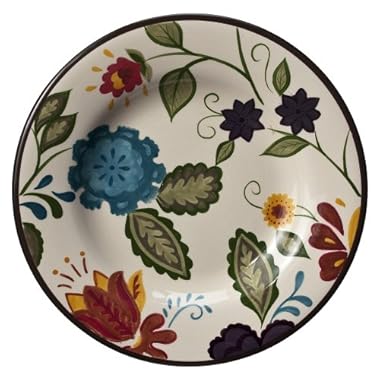
The basis of my product idea stemmed from the fact that film and tv in the 1940's was completely black and white. What a perfect canvas for bold colors, textures and prints! The most striking page in the spread featured Lara Stone in a beautifully tailored Balenciaga by Nicolas Ghesquiere shirtwaist dress (2011RTW). With bold colors of fuschia, shades of orange, royal blue/purple, red and mustard yellow set on a white background, I was staring at a palette of inspiration. I think this dress spoke to me so deeply because I've always been attracted to that kind of paisley-esque floral. In fact, I've been stalking this dinnerware set in a similar print at Target for months. I just can't muster a good excuse to purchase it.


So imagine my joy when I met with my latest joint venture partner and she unveiled swatches of colors that had been dancing around in my head for the last two weeks. Talk about thrilled! Glam girls think alike :-)

We'll revisit this post when it's time to reveal the new project. Until then, take note: Beauty and fashion walk hand in hand. If you want to succeed in the beauty industry (especially color cosmetics) you must keep a close eye what the fashion industry is doing.

Here's to the Glam Life!
[ ... ]

Friday, June 24, 2011

Cracking the Code: Shea Butter and SPF


On more than one occasion, I have heard and seen shea butter being purported as a sunscreen. While I know this to be untrue, I thought it would be a good idea to explain where this particular shea butter myth comes from, what's true and what's not.

Natural, unrefined Shea butter is very complex. If you've ever melted pure shea butter and noticed a gritty texture when it cooled, then you've experienced firsthand just how complex it is. The chemical component that people attribute to shea butter's sun protection is cinnamic acid. Cinnamic acid does, indeed, have UV absorption properties in the 250-300 nm wavelength (UVB). However, the concentration of cinnamic acid in shea butter is not strong enough to provide any real sun protection. Even when shea butter is standardized for a higher concentration of cinnamic acid, it still doesn't provide substantial sun protection. Alternatively, the cinnamic acid in shea butter can work in synergy with organic sunscreen actives (ex: OM-Cinnamate)to give a broader spectrum SPF (more UVB protection and maybe some UVA protection). **We'll discuss synergy in a later post.

To sum it all up, shea butter alone is not enough to protect your skin from the harmful rays of the sun. It may (or may not) give your sunscreen of choice an extra boost of sun protection when applied separately. The synergy more than likely works better in the actual formulation. If you're looking for a sunscreen with broad spectrum protection, shea butter is an ingredient that you probably want to see in the ingredients list. Plus, you get all the other benefits of shea butter with just one product.

Here's to the Glam Life!
[ ... ]

Monday, April 11, 2011

The Spirit of Competition


It is inevitable, every business has competition. There's always going to be another company that offers the same or similar products/services as your own. As the saying goes-- There's nothing new under the sun. In order to grow a strong, successful cosmetic company, you must familiarize yourself with the competition and learn how to compete. Most people understand the concept of competition, but not everyone knows how to compete effectively.

The biggest mistake I see startups make is trying to make a product too much like one that already exists. What I find fascinating is that usually companies start out with a very unique idea yet end up with a product that is not equally unique. I know exactly how it happens because I've seen it a time or two. In the midst of studying the competition and seeing what it is that people like about their products, you start to convince yourself that consumers will only find use for products that are just like the ones that already exist. Oh ye of little faith! Give consumers a little credit... they like what they like until something comes along that is.... drumroll.... BETTER. Understand that an existing company has already carved out it's fan base. There are consumers who use those products loyally because of product performance and the relationship that has been built over time. To introduce a product to the marketplace that virtually already exists is a huge risk. It's challenging enough to convince consumers to give your product a try so when they do try it, give them a reason to keep coming back. The key to being able to compete and (ultimately) win, is to stand out. Below are my 5 tips to winning in business:

1. Decide what you want to sell and who you want to compete with.

2. Get to know what your competition has done to find success.

3. Improve on what your competition has to offer. **When I say improve on the competition, I don't mean take their exact product and add a little something to it. I mean study the benefits and results their product. Find out what their fans love about their product and then develop your own product that tops the competition.

4. Customize your product/brand to suit YOU ie your personality, style, thought processes, etc.

5a. Market it.

5b. Market it some more. Branding and visibility go a loooooonnnnng way in getting your product(s) the attention they deserve.

If you follow my advice, you'll be well on your way to thriving business.

Here's to the Glam Life!
[ ... ]

Saturday, April 9, 2011

Beauty Reflections


I just spent about 10 minutes in the mirror analyzing my skin... studying it, assessing the flaws and thinking of a master plan to make it perfect. This past week has been a complete disaster in the beauty department. I make no apologies for being vain... and when I say vain, I mean I care a whole lot about my appearance. I want my hair to be perfect and when it's not it can ruin my day. I want my skin to be clear, soft, pore-less and glowing... when it's not, I'm nearly depressed. This morning, I sat in deep reflection about skin and hair care from a personal perspective. I thought, "My skin and hair could probably take care of itself if I just let it." I believe that wholeheartedly.

I stopped using shampoo back in September (6-7 months ago) because I developed a product that cleansed the hair without stripping the natural oils. That was one of the best things I could have done for my hair (and my daughter's). I was reminded of just how harsh shampoo can be when I decided to use it last weekend and experienced the biggest hair trauma of my life... complete with dramatic tears and sound effects smh. My hair, especially my natural hair, is better off without the suds. I'm beginning to think the same is true for my skin. I'm not willing to eliminate my soap and body wash, but I think it's time to throw out my facial cleanser and allow my skin take care of itself. Don't get me wrong, I'm still going to put the good stuff in. I won't be letting go of my toner, exfoliators or moisturizers. I just think that maybe I'm doing too much by using a cleanser to "clean" my face. How dirty could it be? With using a cleanser I've noticed my skin has changed from dry to combination... but not in the typical areas. I don't have t-zone issues alone, my cheeks may break out too. O_O I NEVER had issues with breakouts before. I also started to see my pores in the smile line area between my nose and mouth. That is not cool at all. Halfway through my skin care bootcamp this past week, I stopped using my cleanser. Instead, I rinsed my face with warm water and used my white tea toner and aloe. My dry patches are clearing and my pores are returning to normal size. From a scientist's perspective, I think the cleanser may have been throwing off my skin's natural ability to regulate itself.

This is not to say that I think everyone should throw out their shampoo/cleanser. But as a person with naturally dry skin and hair, I don't need it. I rarely wear makeup (only eyeliner and mascara when I go out). Nor do I put a lot of product in my hair between washes. Someone that did either may still need to use a little bubble action in their beauty regimen. Just remember, if bubbles are involved, conditioning and moisturizing is not an option, it is a requirement.

What are your beauty reflections? Have you considered changing the way you care for your hair and skin? Tell us about it!

Here's to the Glam Life!
[ ... ]

Tuesday, April 5, 2011

DIY Skin Care Recipes


It's been quite awhile since I've posted on the blog. I really wish that weren't true because I have so much to share. I literally have about 20 blog titles written down in my little journal, I just haven't had the time to post. I've been super busy in the lab making magic for my clients and I just recently moved to a new location. :-D

I rarely share skin care recipes, but since I've slacked off so much here, I think it's ok. On March 26, 2011, my first ever television segment aired on WXYZ Channel 7 News (Detroit). There I shared 2 very easy and effective skin care recipes that you can whip up in your kitchen. The recipes are posted below the video. And for those of you who are wondering, yes I do actually use these recipes. I use the toner daily and the mask as needed (1 or 2x a week). Right now I'm doing a skin care bootcamp because my temperamental skin has decided to act out on me o_O. So this week I'm doing a version of the mask everyday.

Here's to the Glam Life!


Antioxidant Facial Toner

What you’ll need:

1 cup of boiling water
1 bag of green or white tea
(I use white tea with blueberry and pomegranate)
1 tsp of pure honey

Directions:

Add the honey to hot water and stir.

Steep the tea in the honey and hot water mixture for 2 minutes.

Let tea cool to warm or room temperature.

Apply toner to the face and neck using your fingertips in an upward circular motion.

Let dry for 15-30 seconds before applying moisturizer or facial mask.


Strawberry Cream Facial Mask


What you’ll need:

3 strawberries, chopped
1 tsp of wheatgerm
(Can substitute with oatmeal)
2 tbsp (Organic) Whole Milk Plain Yogurt

Directions:

Mash the strawberries in a clean, dry bowl.

Add the wheatgerm (oatmeal) to the strawberries and mix.

Add the yogurt to the mixture and stir until completely mixed.

Apply to damp face and neck with fingertips. Feel free to lay it on thick.

Let dry for 15-20 minutes.

Rinse with warm water. Pat dry. Apply moisturizer.
[ ... ]

Sunday, January 9, 2011

Beauty Product Challenge


I wanted to start the year off with a challenge for my readers-- consumers and fellow formulators alike. While natural products are all the rage these days, it can be difficult to find "all natural" products that can compete on all levels with their synthetic counterparts. Before you allow yourself to think that natural formulators need to step it up, allow me to give a little insight.

A great deal of the ingredients used in cosmetics are needed to enhance the appearance and texture of an otherwise effective product. Formulators go to great lengths to ensure that their finished products feel great on the skin and also look good in the jar/bottle. I'm willing to bet most of us have never considered the level of effort that it takes to make a crystal clear bath gel that also smells like berries. Some of the very ingredients on the chopping block are only used to the more superficial expectations of the consumer.

My own laboratory work is limited from time to time because I have to make sure the products are not only effective, but also look/feel like something consumers have seen/felt before. When you're working with natural ingredients that have their own color and texture mixed in with their amazing benefits, things get tricky.

SO HERE'S THE CHALLENGE

I challenge consumers to throw out all of their preconceived thoughts on what a cosmetic should look or feel like. Forget that creams and lotions are "supposed" to be pure white. Pretend that liquid hand soap was meant to be a little cloudy. Allow a cosmetic to improve your skin over a period of time instead of expecting instantly silky hands and legs. If you say you want natural, give natural a real shot. This way, formulators can focus on creating products that truly give long term benefits as opposed pretty colors and short lived instant gratification.

I also challenge formulators to push natural products even if they are a little different than what consumers are used to. Someone will be willing to try it... and when they love it, the word will spread.

Let's step out of the monotony and jump into something new, unique, different and worth it. Here's to the Glam Life!
[ ... ]

Thursday, December 2, 2010

A Lesson in Elasticity


Elasticity is a very important factor in assessing the strength of hair. The elasticity of the hair is an indicator of what styles and/or processes your hair can withstand. When hair has low elasticity, it will not hold a curl well (thermal or wet styled) and it is more prone to damage caused by styling and chemical treatments. Basically, hair with low elasticity is weak and must be handled with care.

Chemical treatments including relaxers, permanent wave, color and even keratin should be preceded by an elasticity strand test to ensure minimal (ideally zero) breakage occurs. But you should also consider performing an elasticity test before going to wacky with the hooded dryer, blow dryer, round brush and flat iron because this requires good elasticity, too. One way to test your hair's elasticity is to take a [full length] strand of hair from your comb or brush. Hold the strand with the index finger and thumb of both hands about 2 inches apart. Quickly and firmly pull the strand of hair. If the strand snaps, it has low elasticity; If it remains in tack, it has good elasticity.

Another strand test that is equally as fun is what I call the "ribbon curl" test. Hold a strand of hair between the index finger and thumb of one hand. With the index finger and thumb of the opposite hand, use your thumb nail to firmly run along the length of the strand so that it curls. -- This is similar to curling a ribbon with scissors. -- Now stretch the curl until the strand is straight then let it go. If the strand returns to the original curl pattern, it has good elasticity. If it returns to at least half the original curl, it has moderate elasticity. If it stays straight, your hair is in bad shape :(.

Many factors affect the elasticity of the hair. Excessive heat styling, combing/brushing when the hair is wet and chemical treatments can all have a devastating effect on your hair's level of elasticity. If after performing the strand test you find that your hair has low elasticity, avoid all of the above styling faux pas. Hair elasticity can be improved by giving your hair what it lacks... PROTEIN! Hair is 100% protein (keratin). Hair with low elasticity has weaker protein bonds than that of good elasticity. Nevertheless protein treatments are a good idea for everyone sooooo... Run, run, run to your nearest beauty supply to purchase a deep conditioning protein treatment.

Here's to the Glam Life!
[ ... ]

Thursday, November 18, 2010

Hair, Hair and More Hair!


Wednesday evening, I gave a speech entitled "Hair, Hair and More Hair!" at my Toastmasters International club. I covered a lot in that 9min 30sec speech that I have not yet covered here... so, here it goes. :-)

I've always been completely fascinated and intrigued by hair. My mom has maintained her cosmetology license for nearly 30 years, so I grew up a tad more knowledgeable and obsessive about my hair than many other little girls. In addition to working on a hair care line in the lab, I recently decided to make a drastic change in the way that I manage my hair. Enter even more obsessive behavior O_O. As the glam girl in me was reading about various hair textures and styles and treatments, the scientist in me peeked in to ask a few questions. A scientist that has questions cannot rest until they have answers, so you can probably guess how my "research" grew wings.

How does hair get it's texture?

The texture of any one person's hair depends on the shape and size of the hair follicle. There are 4 general shapes of a hair follicle which happen to correlate perfectly with Andre Walker's hair types philosophy. A hair follicle is like a tiny tube that guides the hair to the surface of the scalp. A round hair follicle yields straight hair. The more oval the hair follicle, the more curly the hair it yields.

Similarly, the thickness of hair is dependent on the size of the hair follicle. Large follicles produce thick strands of hair while smaller follicles produce thin strands of hair.

What I really wanted to know was the real science behind hair texture. I was interested in why hair texture differs across and within ethnic groups. Could it be genetic? Hormonal? Due to human adaptation/evolution? Apparently, the type of hair your parents have definitely determines the type of hair you end up with, whether that is straight, wavy or curly. Just last year, a study showed that variants of a particular gene determine how curly your hair will be. Scientists still aren't clear exactly which variants play a part or how they work.

The fact that some people have hair that changes textures throughout their lifetime hints that hormonal changes may be at work. There are even cases of caucasian people with thick, coarse hair like that of African and African American people. It's a rare occurrence, but it happens often enough to have a name-- "Wooly Hair Syndrome". Imagine that.

While I'm slightly disappointed that all of my questions were not answered, the research is well on it's way. I look forward to finding out what factors are at work in determining our hair texture. I hear that the research is being pushed because the findings are a gold mine. There may be a pill developed that could change your hair texture from straight to curly and back straight. My curiosity didn't take me to that train of thought (that's bordering on mad scientist territory imo), nevertheless, I find it all muy interesante...

So, what's your hair texture? Does it change from time to time?

Here's to the Glam Life!
[ ... ]

Thursday, November 11, 2010

So Dry, So Unfortunate


It's that time of year again when my skin starts going absolutely nuts. About 3 or 4 years ago, the skin on my hands became really dry and chapped. It was so bad that my finger tips could snag soft material and if I rubbed my hands together you could hear it... clearly. O_O It was devastating for a gal like me, but I tried to ignore it. After all, I was taking 2 lab courses in school and working part time in an industrial lab as well. I thought it came with the territory. But now that I'm done with school and I'm not working with harsh chemicals, I still find myself with the ever dreaded, severely dry skin.

Normally in the fall and winter months, the biting winds and blistering cold take the blame for the dry skin epidemic. However, thus far I have only had to wear a coat twice, so it was time to dig a little deeper...

pH Makes the World Go Round...

The pH of normal skin is mildly acidic ranging between 4 and 6.5. A good moisturizer will not only contain key moisturizing and nourishing ingredients, but it will also have a pH in the range of normal skin. Using products that are too acidic (pH less than 4) or too basic (alkaline, pH greater than 7) can cause irritation and dry skin. Some products will indicate the pH on the label, but don't count on it. If you really want to know if your dry skin troubles are due to the products you're using, pick up some pH paper from your local craft store and see for yourself. Unfortunately, most soaps and cleansers have a pH much higher than 6.5. So daily bathing can be an uphill battle. Dare I recommend skipping a full body lather and only "hit the hot spots" once or twice throughout the week? It's a bold proposition, but desperate times...

What if your products are not to blame?

I'm almost running out of things to blame for my dry skin dismay... it's not the weather (directly) nor is it the pH of my topical cosmetics. However, pH is not just an external factor. Your internal fluids have a pH as well. Aha! Maybe we're on to something. An internal pH that is too acidic or too basic can have a negative effect on your body in many ways, one of which is dry skin. The fact that I always have dry skin, but it worsens in the fall/winter peaks my scientific interest. I plan to take a deeper look into my eating habits and how they differ in the warm months vs the cold months... stay tuned for an update from my mini research project.

Meanwhile, what have you discovered are your dry skin triggers? What are your cures? All the dry skin Glam Girls want to know!

Here's to the Glam Life!
[ ... ]

Monday, October 18, 2010

Not Tested On Animals


I've seen the claim "Not Tested On Animals" more times than I can count. I recently saw it while browsing Etsy, so I thought now was a perfect time to address it.

I'll start by saying: I don't know of any cosmetic end product that has been tested on animals. IF any exist, they are few and far between. The typical testing that cosmetic companies undergo involve test tubes, beakers, volumetric flasks, graduated cylinders, analytical instrumentation and human subjects... NOT animals.

So where does the claim come from?

The claims "Not Tested on Animals" or "Cruelty Free" are mere marketing claims meant to appeal to the consumer that opposes animal testing. Once upon a time, animal testing of cosmetics was commonly used to assess the safety of cosmetic raw materials and/or end products. Because this testing method was once widely used, many veteran cosmetic raw materials have been tested in this way. For this reason alone, the claim may not hold any weight (but it sounds good, right?).

That doesn't mean it's obsolete

The advancement of technology and testing methods have eliminated the need for animal testing in most instances. Even still, the FDA will support the (responsible) use of animal testing to substantiate product safety. By "responsible" I mean using as few animals as possible, as humanely as possible, while still obtaining enough information to draw a conclusion. Because animal testing is a legal and acceptable (by FDA standards) form of product testing, it may still occur today. However, it is not likely for typical end products or raw materials.

Playing Devil's Advocate

I understand the objection to animal testing and as a cosmetic manufacturer, I do not foresee employing this strategy. HOWEVER, if a product/ingredient needed to be tested in living, fully functional skin-- would you rather it get the initial trial run on an animal? or on a fellow human? Which is really more "humane"? Just food for thought.

Here's to the Glam Life!
[ ... ]

Tuesday, October 5, 2010

Moving On Up!


I promised myself back in August that I would take the time to recognize my accomplishments and give myself a pat on the back before I return to business as usual. So in keeping with my promise, I have to acknowledge the fact that I've reached one of my major goals for 2010.

Writing is something that I enjoy and I'm able to use it as a tool to share some of the things I've learned over time- hence this blog. I'm pleased to say that now my blog is not the only avenue I've used to blab about cosmetic science. My very first published (in print) article can be found in the October issue of Skin Inc Magazine. My goal was more than just getting published. I wanted to contribute to a magazine that served my clients and my peers. Skin Inc is just that! As a notable, well respected spa business solution magazine, Skin Inc reaches spas, salons, estheticians, makeup artists, manicurists and cosmetologists as well as cosmetic scientists like myself and entrepreneurs looking to jump into the market.

I am honored that I was given the opportunity to submit my work to such a major magazine in the industry. This is the first, but it most certainly is not the last.

Read my article on the Skin Inc website: Excellent Extracts Consider it your dose of cosmetic science for the day/week.

So what did I do to celebrate? I treated myself to a Grande White Chocolate Mocha from Starbucks which I am sipping as we speak. It's the little things :-)

Here's to the Glam Life!
[ ... ]

Wednesday, September 22, 2010

pH and Hair Care


I started a new project in the lab last week that inspired this blog post. While developing new products, a lot of "tests" are done to make sure all is as it should be. One test that is a constant for all (most) products is pH. pH indicates the level of acidity (or basicity pOH) of a substance. pH is important in cosmetic product development because skin and hair have pH too. The products you apply to your skin and hair should work with your body chemistry, not against it.

The pH scale starts at 0 and caps off at 14 with 0 being highly acidic, 14 being highly basic and 7 being neutral (7 is the pH of distilled water). Either end of the scale results in severe chemical burns. The pH of normal, healthy hair ranges from 4.5 to 5.5 (mildly acidic). Similarly, the pH of basic hair care products range between 4 and 6. Color treated and/or damaged hair tends to have a more basic (alkaline) pH. In a basic environment, the cuticle layer of the hair stands out and appears frayed or split. In order to treat damaged hair, a hair product must be more acidic to smooth the cuticle layer resulting in less tangles and higher shine. The process of treating alkaline hair with acidic products is what is meant by "pH balanced". Knowing that damaged hair has a higher pH indicates that a normal pH hair care product may not be very effective in treating damaged hair.

Putting it all together

I'm sure you've noticed that hair care products are marketed for certain hair types ie dry/damaged/split ends, normal, oily, etc. While these products will often use different ingredients to garner results, one key factor is pH. A formulator will know if the product has a chance of working just by taking the pH of the final formula. I have rarely seen the pH of a hair care product disclosed on the packaging. So as the consumer, you need to get a little crafty. Before trying a product, I suggest you pick up your own supply of pH (litmus) paper and do a quick test. The ideal pH would be 4 or 4.5 to work well on all hair types. No matter how damaged your hair may appear, you never want a product with a pH lower than 3-- and even that's pushing it. **Keep in mind, the pH test only works for products/treatments that contain water.

You're now just a pH test away from gorgeous, healthy hair ;-) Here's to the Glam Life!
[ ... ]

Sunday, August 29, 2010

Since it Can't be Priceless...


I promised to start adding a splash of business development posts to the blog, so here's the first.

One of the most important things to consider when you're looking to launch a product is the retail price. Often, potential clients ask me... "How much will the product cost?" Unfortunately, that's not a question I can readily answer. There are a number of factors to consider when thinking about the final cost/price of a product including the ingredients, volume (how much is in the bottle), packaging, target market and profit margin. I encourage clients to determine what price will suit their target market and also how much profit they would like to make per unit BEFORE we begin the project. Everything else can be adjusted along the way. Often, a contract manufacturer can deliver the results you seek within your budget. The key is to know up front.

While catching up on my reading, I stumbled upon an article on Entrepreneur.com about landing major retail placement. Among the tips was planning ahead for profit. Read that article here

I added it to my bookmarks for future reference, I recommend you do the same.

Here's to the Glam Life!
[ ... ]

Sunday, August 22, 2010

Hope For Your Mani


I was watching The Rachel Zoe Project with my bestie earlier this week and of all the things to comment on, she said "Is her nail polish chipping?!" Yes, Rachel Zoe's nail polish was chipping and frankly it always is. Like most girly girls, I absolutely love nail polish and I simply hate when it chips. But the truth is, nail polish just can't be great on natural nails.

Why not?!

Nail polish is made of plasticizers, film formers, solvents etc that temporarily adhere to the nail beds. Women that wear nail enhancements like acrylic, gel or wraps don't experience chipping within a few days like with natural nails. The difference is, our natural nails have oils and moisture that prevent the nail polish from really gripping the surface. Nail enhancements create a barrier between the natural nail and the nail polish that prevents oil and moisture from inhibiting the performance of the polish. In addition to that, our natural nails are flexible. When our nails bend, they create minor cracks in the film (nail polish) that eventually result in chipping. Since gels and acrylics are rigid the polish doesn't have the chance to crack.

That's the bad news, here's the help...

I don't typically need my nail polish to last for too long because I can only wear it when I don't have lab work. Of course, I'm the exception, everybody else at least wants one full week. The key is to create a barrier between your natural nail and the nail polish. That barrier should also make your nails stronger and prevent a lot of the bend and crack issue. Nail glue to the rescue! This is a cheap trick that you can try at home. It causes no damage to your natural nail and it doesn't take a lot of time to do. Buy a small bottle of that brush on nail glue and apply a THIN coat to your natural nails. Let it dry and proceed with your normal nail polish application fun... basecoat, 2 coats of polish and top coat.

Let me know how much longer your mani lasts now... Here's to the Glam Life!

Oh, manicurists, leave a comment with any other tips and tricks you may have to help mani's last longer. Thanks!
[ ... ]

Monday, August 16, 2010

EVERYBODY Wants One...


I get inquiries for all kinds of product development ideas. Usually, the products I'm asked to develop have differentiable features, but one thing I hear probably 85% of the time is *drumroll*

"I want to patent my product."

Is that even possible?

Yes, it is possible to patent a cosmetic product, but it's not likely. Most of the time my prospects believe they can patent the formula to keep it safe from being reverse engineered or reproduced. Unfortunately, that is just not the case. You cannot get a patent on a recipe and a patent certainly won't keep the formula safe. Securing a patent on a cosmetic requires scientific innovation. The patent is not so much on the end product as it is on the process or key ingredient that makes the product unique. The process or key ingredient must be completely new or have a completely new use.

Even if you can, I don't advise it...

When you file for a patent, you must give full disclosure of the product. I'm talking detailed descriptions of the ingredients, the equipment used, the exact formula etc. This kind of transparency means any and everybody has access to the product that was to be the ticket to your million dollar dream. Contrary to popular belief, patented cosmetics can and will be knocked off...legally. Think about it, lip plumpers and eyelash growth products have both been patented. But there are so many of them, who knows which was the original? and what's more, who cares?

My best advice is to develop an amazing product and file for trade secret protection. This way, the most important ingredient that makes your product a cut above the rest can remain a secret. With trade secret protection that ingredient never has to be exposed... Think Colonel Sanders(KFC)and Pepsi. Nobody has done chicken or Cola the way they have.

So while I know it sounds really cool and important to hold a patent on your fabulous product, it's likely more trouble than it's worth. I don't say this to crush dreams.. That's just not what I'm about. I say it only to make you aware before the dream gets too big and is crushed by reality. Think about what's really important-- having a patent, or having a results driven product that makes millions for you in the long run :-) Do you homework and take it to the bank!

Here's to the Glam Life!
[ ... ]

Wednesday, August 11, 2010

Happy Anniversary!!!


August 11, 2010 marked the first anniversary of Envie Bath and Body. While most people would've found some way to celebrate that milestone, I merely mentioned it briefly on twitter and moved on. Even the fact that I acknowledged the day as being slightly special was big for me. For some reason that is unclear to even me, I rarely "celebrate" anything that I've accomplished. It could be because I have endless goals and dreams. As soon as I reach a goal, it's on to the next. No more than a week ago, I flipped through one of my lab notebooks from college. Looking at that notebook and all the textbooks and notes it was among reminded me of just how hard I've worked to get to where I am. I promised myself that I would begin to celebrate more along my journey... starting now.

*cupcakes, confetti, balloons, and horns* HAPPY ANNIVERSARY!!!!

In just the first year, I have managed to acquire several projects, hosted a fragrance event, had product placement in "swag bags", met a bunch of amazing people, traveled to New York and Chicago on business, written articles for a major industry mag *to be published soon :-) and positioned the company for monumental growth in the next year among other things.

When I actually think about it, I'm proud of myself. So here's my pat on the back... What's next? :-D

I hope you take the time to revel in your greatness as well! Here's to the Glam Life!
[ ... ]

Monday, August 9, 2010

Follow the Rules... Pretty Please?


I often have people approach me to review the ingredients lists of their personal care products. Usually they want to know if the product(s) are as natural as they claim or if the product will work. Most of the time, I'm reviewing mass market products and the ingredients lists are properly written. Other times, I'm disappointed to see that they aren't.

We've already established that I believe in natural ingredients, and also that I have great respect for synthetics... I'm equal opportunity. But when I see natural product companies failing to play by the rules, my red flags go up.. and your's should too. The FDA requires that ingredients be listed in descending order of concentration and by INCI nomenclature. INCI nomenclature is the accepted chemical naming system for the cosmetic industry. So when I see an ingredients list that looks like this (just an example):

Olive Butter, Coconut Oil, Vitamin A, Vitamin E

Instead of like this:

Olea Europea, Caprylic Triglyceride, Retinyl Palmitate, Tocopherol Acetate

... I'm very concerned.

There is so much controversy surrounding the cosmetics industry now, so everyone needs to play by the rules. That includes companies that focus on being completely natural/organic. Even the minor details make an impact on what is "safe" or "unsafe". So while I'm all for natural products and the beauties that use them, I encourage you to demand more from your favorite companies. If you come across a product(s) that has all the ingredients listed in lay-man's terms, please give them a courteous nudge. Let them know that you know better and ask them to do better. Consumer's make the world go round, so do your part... Pretty Please? :-)

And if you really want to do your public service, refer them to me... I'll whip their ingredients lists into shape! :-D

Here's to the Glam Life!
[ ... ]

Thursday, August 5, 2010

Eczema Relief


As you may already know, my son has severe eczema. I used a hydrocortisone compound nearly everyday for a year to keep his skin clear. After getting conflicting opinions about whether or not there would be adverse side effects, I chose to discontinue use. Instead, I looked to natural emollients to keep his skin moisturized. Evening Primrose Oil has a standing reputation for being an effective treatment for eczema and psoriasis, so I tried it. I didn't notice any drastic change in the condition of my little man's skin so the search continued. A friend of mine came by and put a little Emu Oil on his arms which instantly stopped the itching and softened his skin. FANTASTIC!... except Emu Oil is expensive 0_0

Finally, I tried Pumpkin Seed Oil. I already use it in a lot of my branded products because of all it's skin benefits, but I never put it on my son. Oh how I wish I tried it sooner! I put it on him after his bath and his skin was still moisturized throughout the day. By Day 2 of using the Pumpkin Seed Oil, I can already see his rough patches clearing and his skin does not appear dry at all. I haven't used ANY lotion, but I'm sure adding that back to the regimen will be even better.

So what's in Pumpkin Seed Oil? AWESOMENESS!

Pumpkin Seed Oil has a significant amount of fatty acids, notably: linoleic, oleic, palmatic and stearic acids. Linoleic acid helps prevent transepidermal water loss. In other words, it keeps moisture in the skin. Oleic acid is a penetration enhancer that helps transport the benefits of a cosmetic to deeper skin layers. Palmitic and stearic acids occur naturally in the skin barrier lipids. Pumpkin seed oil also has a wealth of vitamins and minerals to nourish the skin.

Word to the Wise

This is a heavy oil and a little goes a long way, so use it sparingly. Also, it has a noticeable "nutty" scent just like pumpkin seeds. Although the scent doesn't last, I recommend putting it on at night to avoid smelling like Halloween.

What have you used to treat your eczema?
[ ... ]

Saturday, July 10, 2010

The Lipstick Theory

I've been away from the blog for far too long, but with good reason. Things are picking up in the lab and I've been working on a little personal and career development. I recently joined Toastmasters International which is a world reknown public speaking and leadership organization. My primary goal was to refine my speaking skills to position me for a few business goals. I decided to that the cosmetics industry would be the general topic of all of my speeches. This week's speech covered the lipstick theory which I thought to be both timely and interesting. I thought I would share a synopsis of the speech here to let you all into another part of my Glam World. :-)

The lipstick theory arose out of the fact that in spite of economic disaster, women still purchased lipstick. It is representative of the idea that people always need a touch of luxury, even if it is an "affordable luxury" like lipstick. The theory held weight in 2001 following the 9/11 attacks when key players in the industry like Estee Lauder saw an increase in their cosmetics sales. While 9/11 was not quite a major economic disaster, it was certainly a precursor for what we face today.

The recession has shown that the lipstick theory is plausible, although it may be due for a name change. Nail polish has risen as the ultimate female recession buster which is not a great surprise considering the similarities. Both lipstick (lipgloss) and nail polish come in a multitude of colors, styles and textures so there is something for everybody. Color has a way of altering moods and complimenting personalities and styles. Personally, lipgloss and nail polish make me feel feminine and can instantly boost my mood. Women love to feel pretty so even if we can't afford a fancy dress or the fab shoes of the season, we can usually splurge on choice glam cosmetics.

Clearly, this is not the 6 and 1/2 minute speech I gave at my club earlier this week, but that's it in a nutshell (minus the quotes and the numbers, etc). You can expect more of my speech summaries in future blogs. :-)
[ ... ]